

Charting the Course
How far we've come 🤜🏽🤛🏽

Hello! Welcome back to Cashflow Connect! This is a series on financial wellness, mastering spending habits, and understanding capital. We explore the experiences that shape worldviews and the incentives behind common financial goals.
Hey.
I wanted to start today with a friendly reminder to check out the podcast version of Cashflow Connect! Share it if you enjoy it :)
We’re on Spotify
and Apple Podcasts
With that, let’s get started.
So far
Over the past 6 months, Cashflow Connect has been growing steadily, with 14 features, 7 podcast episodes, and a cool 60 followers 😎
It may not be much, but it’s humbling to see that you have chosen to read our words, and take control of your own financial wellness.
Of our 14 features, we covered 4 interviews at the beginning. These helped us understand how our community was feeling about money, the things that worried them, and the plans they had made for the future.
We learned a lot then, and we’re listening again now with a one interview segment in August.
Next week, we’d like to interview you, one of our subscribers! If you’d like to be featured on this series, please sign up here.
Hoist the Sails
Since we started, Cashflow Connect has meant to be a relatable source of information on all things Personal Finance. We covered aspects of
Moving to NYC,
The Attention Economy,
Debt,
Health Insurance,
Interest Rates,
Setting up for Investing,
Beginning to Invest, and
How it feels to have Student Loans.
Today, let’s take a step back, and look at this from a 20,000 foot view. Nearly all of America engages with everything we've discussed so far, but a significant portion stop here. As of last year, according to Gallup, ~40% of Americans do not own any stock.
The poll does a great job of showing how even 61% is breaking previous records - this is the highest percentage of Americans that reported owning any stock, including through retirement accounts, since the Great Financial Crisis of 2008, or the “GFC” as I heard it referenced outside the J.P. Morgan building.
In my home country of India, that number is closer to 20%.
Stock ownership is strongly correlated with household income, formal education, age, marital status and race, so it begs the question: How can we help such a big part of our community feel ready to participate for their share of wealth creation?
Helping people feel more stable in their lives means tax breaks, affordable housing, public transportation, student debt reduction, and mandatory financial education. These all need to be aspects of economic policy to push more institutional spending and attention to these areas. The measure of stability to evaluate the advantages this will bring, in my mind, is best described by Risk Tolerance.
Risk Tolerance refers to the degree of risk any person is willing to endure given the “volatility” in the value of an investment. Volatility is one statistical measure used in evaluating risk. Age, investment goals, and household income contribute to an investor's risk tolerance.
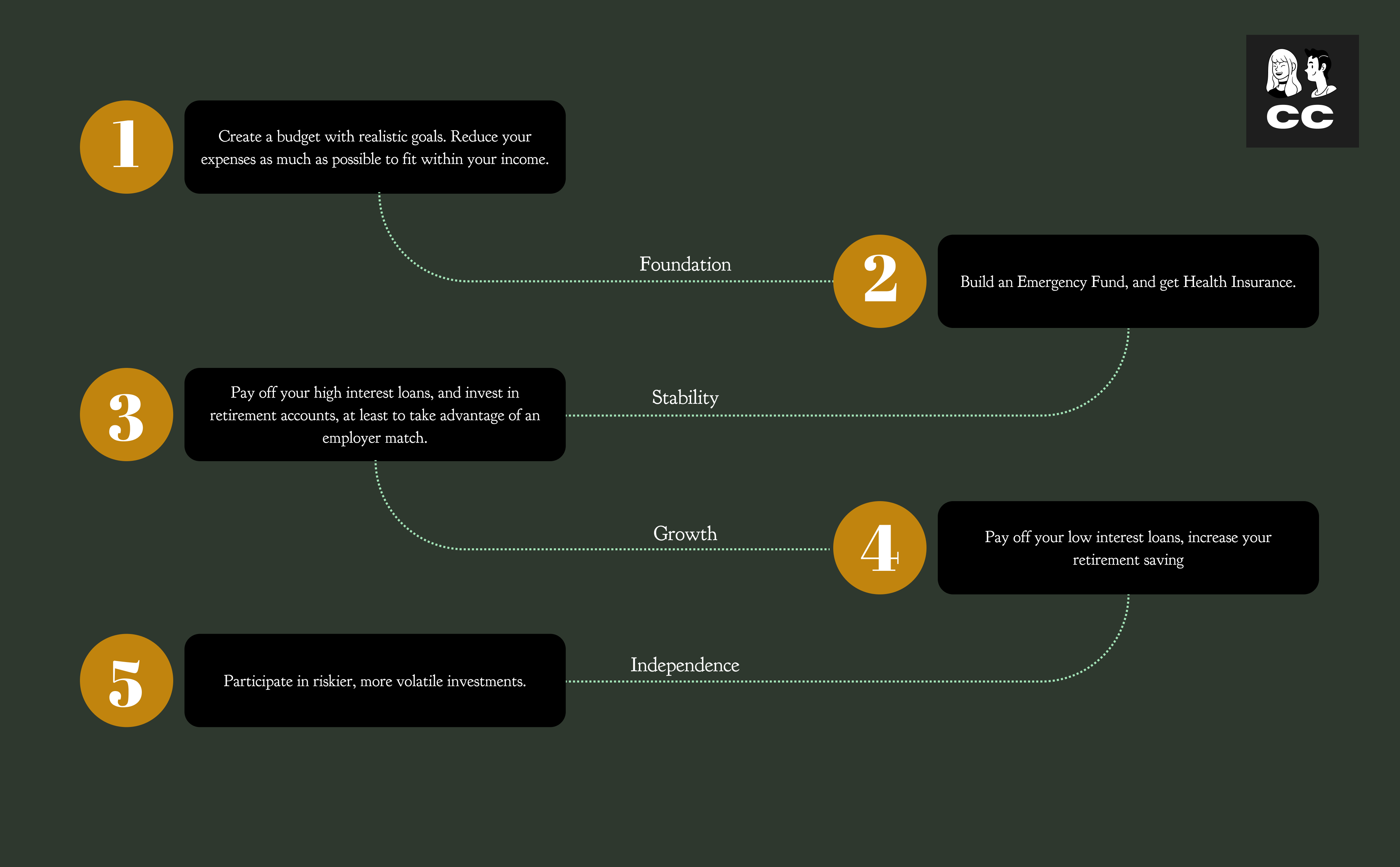
Here’s my interpretation of the path to Financial Freedom:
Outro
That’s all for this week folks! A recap and a thank you for sticking with us.
Please do reach out if you’d like to be featured on this newsletter, please send us an email at cashflowconnect@substack.com.
Thank you for reading, see you next time.
Podcast Version
Disclaimer: The information provided in this newsletter is for educational and informational purposes only. It is not intended as and should not be considered financial, investment, or legal advice. The content is general in nature and may not be applicable to your specific circumstances. Always consult with a qualified professional for advice tailored to your individual situation. The authors and publishers of this newsletter are not financial experts, and any actions taken based on the information presented are at the reader's own risk. We do not endorse or recommend any specific financial products or services. Any reference to third-party websites or products does not constitute an endorsement. The accuracy, completeness, or reliability of information provided cannot be guaranteed. Readers are encouraged to conduct their own research and seek professional advice if needed.